|
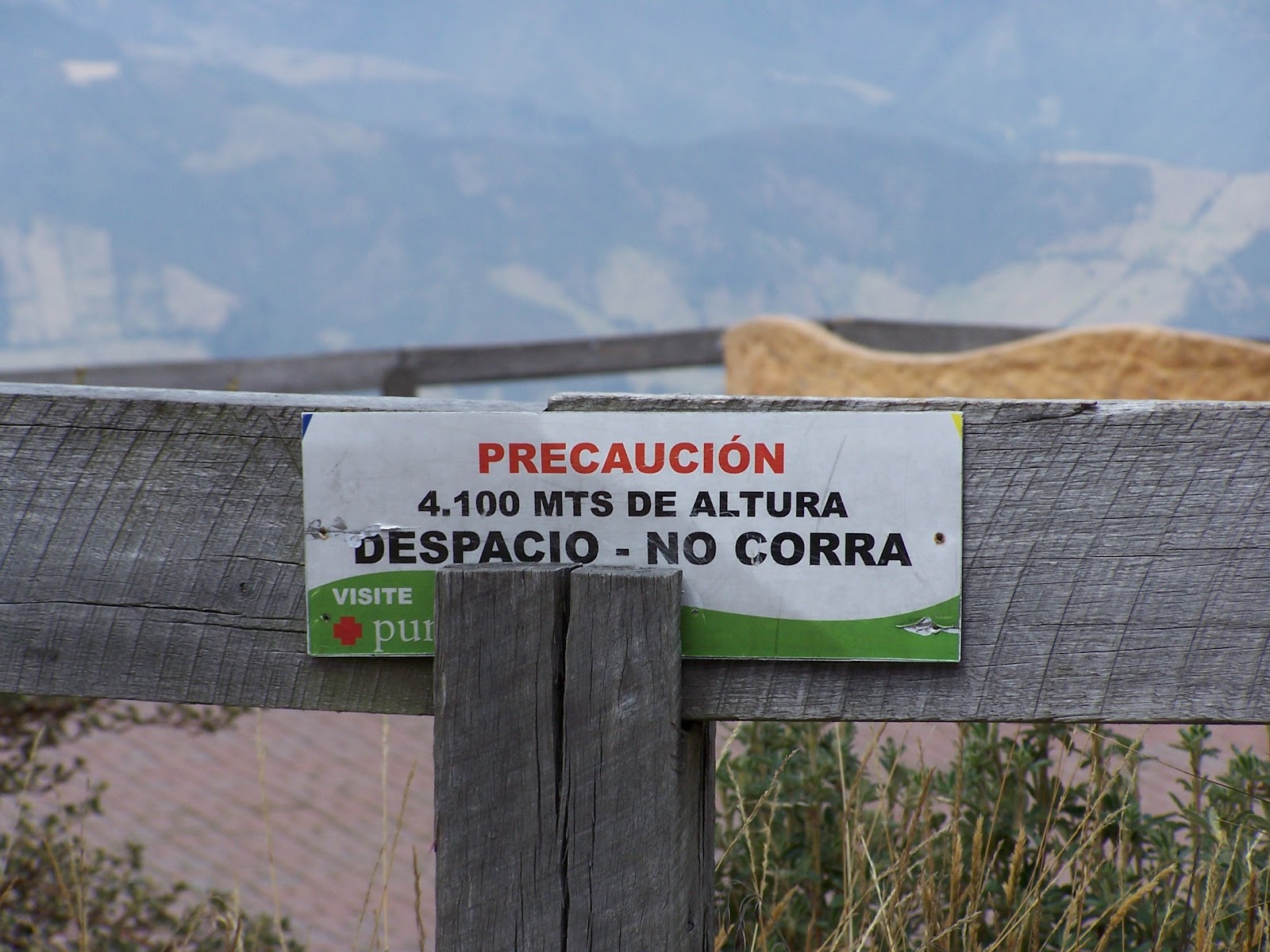
| Tram stops at an altitude of over 12.000 feet MSL. |
|
|
 |
| If you decide to go farther up the mountain, toward the volcano, you may want to stop at the little church first. |
After returning to Quito we caught a taxi to the heart of "old
town". I guess every town has an "old town:" unless, of course, it is a very new town.The original plaza has been preserved beautifully. There are magnificent churches, quaint
barber shops, stores, and all sorts of businesses which seem to be
thriving, including banks. At the entrance of each bank there is at least one guard armed
with either an automatic rifle or a sawed-off shotgun. The weapons are held at
the ready position so that it can be fired without hesitation. The alert soldiers constantly scan back and forth making eye contact with everyone in
sight. The forceful appearance of the guards is more startling than the weapons
they carry. I am usually bold when it comes to getting pictures of almost
everything but pointing anything, even a camera, at these guys would be
considered more asinine than bold.
The fact that U. S.
dollars are used in Ecuador
and the proximity of Colombian cartels may explain the heavy defense of the
banks. Or, maybe they just never quite got over Butch Cassidy and the Sundance
Kid—those estiking gringo robbers who
caused all that trouble in Bolivia.
Thugs understand
heavy armament that is meant to stop foul play. This aggressive stance is the
only way to prevent the creation of war zones like those in Mexico.
Public display of military presence seems to be doing a good
job of preserving the peace in Ecuador.
I felt safe from the bad guys.
Pictures of "Old Town":
Fiesta de Miercoles:
When we got back to
the hotel that afternoon we dropped off our gear and set out to
explore the neighborhood. After walking a few blocks we found a big party in
the streets of an intersection. It seems Wednesday is the big night-out for
Ecuadorians and this place is one of many where folks get together to drink,
hoot and holler. On all four corners there were motorcycle cops keeping an eye
on the festivities. As long as no one is being destructive it makes no
difference how much noise they make or how drunk they get, there's no
worry about being hassled by the cops. But, there is zero tolerance for any kind of violence. One important trait in an environment such as this is the ability of each individual to
feel that they are being laughed with
and not laughed at. It kind of reminds me of Juarez
in the 1970s.
When we got back to
the hotel we could still hear the noise from the fiesta so it took a while to fall asleep.
Trip to Otavalo:
Thursday morning we had our usual breakfast of fresh fruit,
juice and
juevos revueltos. Then we struck
out to see the town and get idea how much hats cost in Quito. We were planning a trip to Otavalo, a
town up north, near the Colombian border,
the next morning. The big attraction in Otavalo is the Indian market every
Saturday. If we could get a general idea of stuff was going for in Quito we would have some
idea of what we should pay at the market where goods are bought directly from the
natives who produce them.
 |
| Lake side community. |
The following Monday
we were scheduled to go south to the city of Cuenca so we decided we had best decide what
means of transportation would be most feasible. We discovered it takes ten
hours to go through the mountains on a bus and the price is eleven dollars. The
same trip takes forty five minutes on a plane and costs fifty dollars, so we
went to a travel agency to buy some plane tickets. We would have been better
off going to the airport to get the tickets because it took all afternoon for
the
seniorita at the travel agency to
figure out how to complete the transaction. The scenery was pleasant; hence
another universal truth surfaces in this foreign land: “A pretty girl can do no
wrong.”
By the time we got
done, there was too little time left in the day to do anything but start
packing for our trip the next day.
After
breakfast Friday morning we took a pleasant cab ride out of Quito, down into a big valley and back into
some more mountains and past a volcano to Otavalo.
 |
| Another volcano added to the great scenery along the way. |
 |
| Lago San Carlos |
It was a fun trip
because we got the driver to take side trips so we could look at anything we
wanted to.
The only time I felt a bit uncomfortable was when the taxi
driver stopped the cab, opened the door and ran behind a fence to relief
himself. I had no problem with Juan Gabriel heeding nature’s call; what bothered
me was the fact that he didn’t pull the vehicle off the highway before he
stopped. The roadway didn’t have a shoulder and there was lots of noise from automobile
horns and screaming passengers in vehicles as they rounded the blind corner
where we were parked and had to swerve to miss us.
After Juan finished
is business we continued north through rolling foot hills covered with green-houses. When Charlie asked the driver what was being grown he told us it was
tomatoes and flowers. Give me a break. It had to be mota. If they were really growing flowers and tomatoes they
wouldn’t have had the tall fences and guards.
When we got to
Otavalo the driver was completely lost. This became evident when we
asked him to take us by the Mercado de Los
Ponchos where the market is located. He had to ask directions several times
but we finally found it. People were already set up for the Saturday market.
Then we went on to
the hotel which had the same name as the one in Quito—La Casa Sol. It was owned by the same
people, but this one was in a more remote location on the side of a hill. The
view was good but, again, there was lots of smoke in the air. There were a few
large fires in the distance but most of the smoke was coming from people
burning their trash.
 |
| La Casa Sol; Otavalo |
La Plaza de Los Ponchos:
In the morning the
air was clear and cool. The visibility was at least around 50 miles.We got ready and headed for the market in
where the indigenous people of the Andes sell
their arts and crafts. This huge market is said to provide close to eighty
percent of the monetary income of the natives. Saturday is the busiest day and
we started at one end and worked through the maze of tables and racks that
displayed too many things to list. A look at the photos will give a better
description than words.
The first row was two
blocks long and consisted of food concessions. We had just eaten breakfast at the
hotel so missed a chance to sample some really weird
looking stuff being cooked in huge pots and skillets. I recognized some of the
ingredients like: potatoes, eggs, peppers and such but most of it was pretty
strange looking. It smelled great but I just wasn’t in the mood to experiment.
One reason I was timid was the fact I recognized one of the meat items. I’m
talking about cuyes (koo-ways), or guinea pigs. They are
considered fine dining in Ecuador
and several other countries. They looked delicious, but there are some
critters I just don’t consider to be food.
The market itself was
stocked mostly with hand made items that the indigenous people bring down from
the Andes each weekend. There were too many
things to list, but hopefully the attached photos will speak for themselves.
Bargaining and people watching were the best parts of this experience. Places
like this market are great for practicing Spanish and learning new words.
After I had bought
about all I could carry we went back to the hotel so I could sort the
treasures. It appeared I would need to buy an additional suitcase to get all
the stuff home but with a little imagination and luck the last day of the trip,
I managed. I was lucky enough to talk the airline people into letting me take three carry-on bags.
A few photos of the people, and other treasures, of El Mercado de Ponchos:
 |
| Family fun... |
 |
| Spices |
 |
| Card Game |
Condor Park:
In the early
afternoon we hired a taxi to take us to a condor park at the
top of one of the nearby mountains. This turned out to be one of the best parts
of the whole trip.
At the top of the
mountain is a fenced off area with a gate where an admission fee of $3.75 is
collected. As you walk up the cobble stone paths there are raptors for around
the world in cages spread over an area of about five acres. At the summit,
where the paths converge, there is a gated holding area where several eagles
and falcons are tethered. Just past the holding area is a flat area at the edge
of a cliff that drops of at least a thousand feet. This area is half way
enclosed by a stone seating area.
While sitting there
taking in the view I heard a squawking sound behind us. I turned around and saw a hawk walking on the ground and being coaxed by a trainer who prodded the complaining bird into the
performance area. For the next hour we were entertained by several trained raptors and their handlers.
The most impressive
part of the show was a eagle which flew off the handler’s arm, down the cliff
and out of sight. The bird returned after several minutes and soared in circles
hundreds of feet above us. The handler shouted at the eagle and it tucked its
wings and dove at the trainer. Just before the bird reached trainer’s
gloved hand it open it’s wings and
landed gracefully on the glove.
I took lots of pictures at Parque del Condor. Here are a few of them:
We had a full day and
at
dinner supper we were joined by the only other guest in the hotel; a
lady from Scotland
named Kathleen. I love the sense of humor people from her part of the
world have and she was hilarious. Everything we discussed was fun or funny.
Kathleen is a
retired widow who had decided to see the world. Her itinerary, which went on
for four months, included lots of hiking and mountain climbing. Most kids in their twenties are too lazy or afraid to do the stuff she was enjoying.
The next morning when we went
upstairs for breakfast Kathleen was headed out the door with boots, hat and
back pack on.
Before heading back
to Quito we
visited the small town of Cotacachi which is known for it’s leather goods. I also
had been in touch with an American who had moved there. I was curious to see
the place and decide whether or not I would like to live or stay there for a month or so. I decided that I
may want to return for an extended stay but I don’t think my wife, Debbie, would
ever move out of the USA. I also decided that I am an American and I need to live in America and do all I can to return a positive attitude to as many fellow Americans as I possibly can.
We returned to Quito and started getting ready for our flight to Cuenca. The folks at the hotel had our laundry done and our room waiting for us.
The staff at La Casa Sol, and everyone I had contact with in Ecuador treated me like a good friend who was their guest. They all seemed so happy with life in general and wanted us to have a good time too.
Some photos taken near our hotel in Otavalo:
 |
| Charlie with giant cabbages |
 |
| Sunset on Vulcan Imbabura |
 |
| Charlie's feet |
|
Cuenca:
We were up at 4:30 am so we could get to the airport early for our 7:00 am flight
to Cuenca. The
word
cuenca is
Spanish for basin and this city of half a million people has four rivers
flowing through it. After we leveled off for the forty five minute hop I was
able to get some pictures with my phone. I was most impressed with the
view of the snow topped volcano, called Cotopaxi,
sticking up through the clouds.
 |
| Cotopaxi from above; the elevation of this volcano is 19,347 feet |
We went from the
airport to our hotel and were allowed to check in early. We then put on our back packs and started off to explore Cuenca.
What a beautiful
city. The population is about a half million but the people are laid back and
friendly.
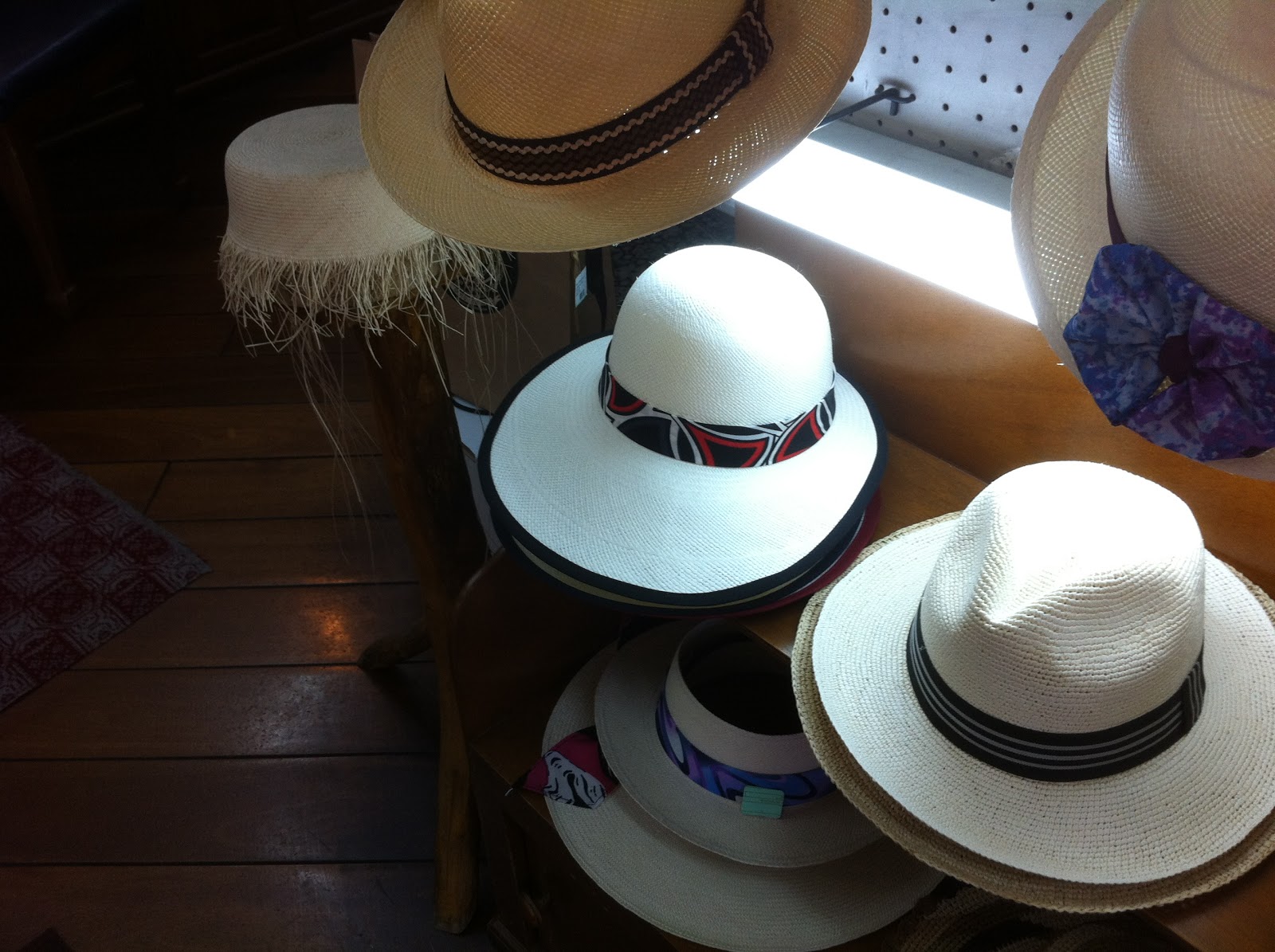
Panama hats were at the top of our shopping list
and Cuenca is
supposed to be the best place in the world to find hats that are completely
finished or can be finished with a custom design. In Quito we learned that the largest factory is
Homero Ortega’s, so we headed that way.
Charlie picked out a
couple of hats, discussed the details of how he wanted them finished and we
were told we could return the following day to pick up the custom sombreros.
 |
| One of Debbie's hats |

These hand made straw
hats are made from
paja toquilla which
is straw cut to various thicknesses. A fine hat takes three months to complete.
The name Panama leads many
to think the hats are made in Panama.
The fact is that Panama
was an early distribution point for the hats. Folks said they got their hats in
Panama
and it was assumed they were made there.
September 11:
We toured Cuenca some more and went
back to Homero Ortega’s to pick up Charlie’s hats. They turned out great and cost a fraction of what they would in the States.
We got a cab back
to our hotel, La Posada del Angel, and started getting our things organized for
the flight back to Quito. We had collected quite a few treasures and had to pack strategically in order to get all the stuff home without extra costs.
We had supper at a the restaurant down stairs. The family that owns
and operates the hotel also owns a popular Italian restaurant which adjoins the
hotel but has its own entrance on the side street. The food and
prices were excellent.
September 12:
We got up at 6:30, had coffee and made our way to the
airport for our 8:30 departure.
Luckily, the folks at
La Casa Sol in Quito
had reserved our same room and allowed us to check in in early. Then we went out and about to
pick up some more gifts.
That afternoon was
pretty kicked back and we mostly hung around close to the hotel.
I went to get my
shoes shined and the bolero did a
great job. He asked for forty cents. When I gave him two bucks he was ecstatic.
On the way back to
the hotel I stopped off at a book store and spend a while visiting with the
owner. The name of the store is The English Book Store and Mark, the owner,
moved to Ecuador from Essex,
near London, in
1987. I told Mark that I had some interest in returning to Ecuador for an extend stay so I
could have some time to consider moving there. He was a wealth of knowledge and
made sure I had a way to contact him if I needed any help.
I went back to the
hotel, showered, packed and spent the evening reading.
September 13:
Our flight back to
the U.S. didn’t depart Quito until 11:30 pm so
we had plenty of time for another adventure. Charlie had read about a
place called Mindo that was about a hundred miles north of Quito up in the mountains. We thought it
would be worth the trip so we grabbed our pack packs and headed out.
We literally jumped
on a bus and headed to the central bus station to catch another bus for the
three hour trip. When we got to the station at 9:30am we learned that the bus
to Mindo didn’t leave until 4:30pm so we hired a cab.
When we got there we
went to a butterfly house and took some pictures. Next we took a ride on a
cable car that spanned a half mile wide canyon. It was about seven or eight
hundred feet to the river below. Take a look at the picture of the power plant for the cable car.
It is a Nissan engine and transmission bolted to a concrete slab. The
accelerator, clutch and gear shifter are intact and a guy sits there and drives
the little cable across the canyon and back.
Pictures around Mindo:
 |
| Cable car across the canyon |
 |
| This set up powers the cable car. It's a Nissan engine, transmission, clutch, throttle and gear shift. |
 |
| Mariposa |
We were glad we took
the side trip and made it back to Quito
in plenty of time to pack and rest up a while before our flight.
We departed on time
and flew all night long arriving at DFW at 8:00 Friday morning.
It was a great trip
but I’m not moving to Ecuador.
Debbie and I have decided we belong in the U.S.A.
I hope you enjoyed the story and
the pictures.
Dennis Sumrak